
Lucky Tunes - Rewards & Music
JKL BuildMusic & Audio
4.22.00 Reviews
- Version
- 1.0.1
- Installs
- 10.00K
- Age Rating
- Everyone
Screenshots

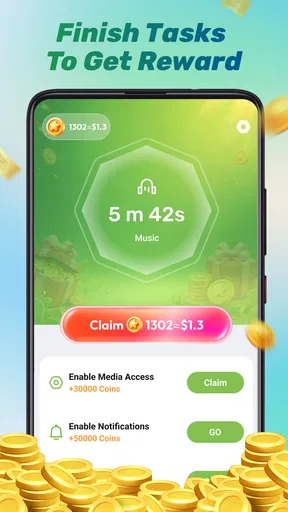
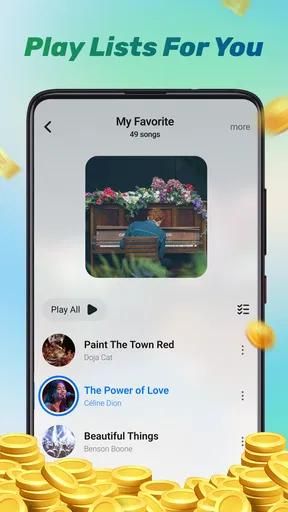
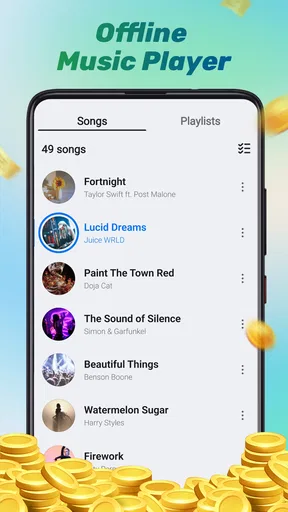
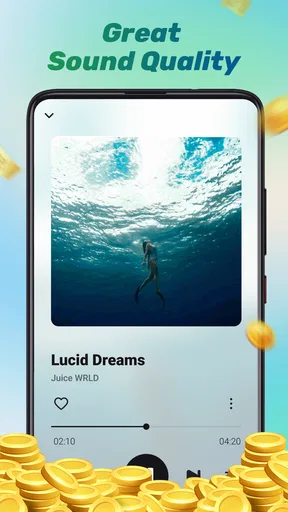
Our Review of Lucky Tunes - Rewards & Music
 Analysis by Appyee
I approached Lucky Tunes as a small, straightforward music and audio app rather than a full replacement for a mature streaming platform. Its purpose is easy to understand: it is designed to help you take your music with you, and its short store label, “Lucky Tunes,” keeps that promise deliberately simple. After spending time with it, my impression is that the app is most interesting for people who want a lightweight listening option and do not need a large ecosystem of advanced tools around it.
The app comes from JKL Build and is available free of charge for everyone. It has reached over ten thousand installs, with a 4.2 average from roughly seventy ratings. That is a useful early signal, although the small amount of written feedback means I would treat the score as an initial impression rather than a final verdict. The current release is version 1.0.1, and it runs on Android seven or later, so compatibility should cover many older phones as well as newer devices.
How Lucky Tunes feels in everyday use
My first reaction is that Lucky Tunes aims for accessibility instead of complexity. That matters in music apps because many alternatives quickly become crowded with recommendations, social features, subscriptions, podcasts, videos, and account-related prompts. A simpler app can be appealing when I only want to open something, choose music, and get on with my day.
I can imagine using it during a short commute, while cooking, or when I want background audio without turning the listening session into a project. The strongest fit is someone who values a low-pressure experience and is willing to accept a more limited feature set in exchange for a lighter approach. It also makes sense for a spare phone, a family device, or a user who finds major music services overwhelming.
That simplicity should not be confused with a guarantee that it will replace every music service. People who depend on carefully organized libraries, sophisticated discovery, offline collections, high-resolution playback, lyrics, playlists shared with friends, or seamless handoff between several devices may still prefer an established alternative. Lucky Tunes is easier to recommend as a focused companion than as the only audio app on every phone.
A practical listening scenario
Consider a typical evening at home. I might place my phone on a kitchen counter, start a familiar listening session, and leave the app alone while preparing dinner. In that situation, the value is not a complex recommendation engine; it is reducing the number of decisions between opening the app and hearing something. If the app’s available music matches my taste, that directness becomes its main advantage.
There is also a useful distinction between occasional listeners and committed music collectors. An occasional listener may appreciate a free app that does not require learning a dense interface. A collector, however, usually wants dependable control over albums, artists, queues, saved tracks, and listening history. Before making Lucky Tunes the main player, I would test those parts with the music I actually use rather than judging it only by its attractive simplicity.
What the early release tells me
Version 1.0.1 places Lucky Tunes in an early stage of its life. I see that as both a reason to be curious and a reason to keep expectations measured. A product at this point can feel clean because it has not accumulated years of menus and legacy behavior, but it may also still be finding its identity. The difference between a pleasant first release and a dependable long-term music tool usually appears in repeated daily use.
The release date of July 31, 2026 also gives the app a very recent profile. That makes the current version especially important: what I experience now may represent a starting point rather than a settled design. I would pay attention to whether future updates improve the listening flow without adding unnecessary clutter. For now, the sensible approach is to treat the app as a young option with room to mature.
Changes and product direction to watch
The confirmed version is 1.0.1, so I would not read more into the numbering than it supports. It shows that the app has already moved beyond its first release build, but it does not by itself prove a major redesign or a particular new feature. That distinction is important when evaluating a young application: a small version change can improve stability or polish without changing the way the app works.
For existing users, the practical question is whether the current release feels dependable during ordinary listening. I would check how quickly the app opens, how easily I can return to something I was hearing, and whether the controls remain understandable after several sessions. Those are more meaningful tests than simply counting visible buttons. A music app earns trust through small repeated interactions, especially when I use it with one hand or while doing something else.
I would also watch how JKL Build handles the balance between growth and restraint. Adding more discovery tools could make Lucky Tunes more useful for people who do not already know what they want to hear. At the same time, too many layers could weaken the directness that makes a lightweight app appealing. The best evolution would preserve a clear route to listening while adding depth only where it solves a real problem.
How the current state affects new and returning users
For a new user, the low barrier is the biggest attraction. There is no purchase price to consider, the content rating is Everyone, and the Android requirement reaches back to version seven. That combination makes the app approachable for a broad audience, including people using older hardware. I would still begin with a short trial rather than immediately moving my entire listening routine, because the right fit depends on how well its actual music experience matches my habits.
For someone already using Lucky Tunes, version 1.0.1 is a reasonable point to reassess the app rather than assume it has become a completely different product. I would look for smoother everyday handling, clearer continuation of a listening session, and fewer moments where I have to stop and figure out what to tap next. If those basics are working, the app can remain useful even without the extensive extras found elsewhere.
One non-obvious trade-off is that a smaller app can be easier to understand but harder to rely on as a complete archive. I would therefore use it differently depending on the situation. It could be my quick background player, while a larger service remains responsible for carefully maintained playlists and long-term discovery. Keeping those roles separate prevents disappointment and lets Lucky Tunes succeed on its own terms.
Where it may fit better than familiar alternatives
Compared with a major subscription music service, Lucky Tunes appears easier to approach for someone who does not want a large catalog of surrounding features. The usual alternatives tend to be stronger when I need extensive personalization, mature library management, or a deeply developed cross-device routine. Their advantage is breadth; Lucky Tunes’ appeal is the possibility of a more focused path to music.
Compared with a phone’s built-in audio player, Lucky Tunes may be more convenient for someone who wants a dedicated music experience rather than manually opening individual files. However, a local player can be preferable when I already own an organized collection and want predictable access without depending on an app’s particular catalog or presentation. That is why I would choose based on listening source and routine, not just on the word “music” in the category.
Compared with radio-style apps, the decision comes down to control. A radio listener may enjoy letting a station shape the session, while I would choose Lucky Tunes when I want a more direct relationship with my music. If I am looking for constant discovery and unexpected selections, a specialized discovery service could be the better tool. If I want something calmer and less demanding, Lucky Tunes has a clearer argument.
Small workflow tips that make the trial more useful
My first tip is to test the app at three different moments instead of judging it after one launch: a quick five-minute session, a longer background session, and a return visit later in the day. This reveals whether it is merely pleasant at first glance or genuinely convenient. The return test is particularly important because music apps are often judged by how easily they resume a habit, not by how attractive the opening screen looks.
My second tip is to use it alongside your usual player for a few days and compare tasks rather than impressions. Try starting music, changing what is playing, finding a familiar choice, and stopping without losing your place. This exposes the app’s real strengths and friction points. A service can feel simple in isolation but less efficient when placed beside a tool with better organization.
A third useful approach is to give Lucky Tunes a specific job. Instead of asking it to replace every audio tool immediately, make it the app for casual background listening or for a secondary device. That creates a fair test and clarifies whether its simplicity helps you. If the app handles that role comfortably, you can then decide whether it deserves a larger place in your routine.
I would also keep expectations realistic around the word “rewards” in the full name. The name may attract users who expect a particular incentive system, but I would not install an app solely on that assumption. I would first evaluate the actual listening experience and read the current on-device explanations carefully. The music function should be worthwhile even if the reward-oriented branding is not the main reason I return.
Remaining gaps and who should skip it
The main limitation is not necessarily a broken feature; it is the uncertainty that naturally surrounds a young, compact app. With only a small pool of written reviews, I would not rely on community commentary alone to predict how it will fit a specialized routine. I would personally avoid moving an important music library until I had tested the app with real listening habits over time.
I would skip Lucky Tunes if my priority is a highly developed music ecosystem. Users who need advanced playlist collaboration, extensive audio controls, deep recommendations, or a carefully synchronized multi-device setup are likely to be happier with a more established service. The same applies to anyone who expects a music app to double as a broad entertainment platform.
I would also be cautious if my phone is used for demanding work and I cannot tolerate even minor interruptions in playback. A young app must prove consistency through use, and the most responsible way to judge that is with ordinary sessions rather than assumptions based on its rating. If reliability is mission-critical, keep a familiar alternative available until Lucky Tunes has earned that trust.
On the other hand, people who dislike bloated interfaces should give it a fair chance. The free price removes the financial risk of trying it, and the Everyone rating makes it suitable for a wide audience. I especially see potential for listeners who want a simple starting point, users with older Android phones, and anyone looking for a secondary audio option rather than another complicated service.
My recommendation after testing the idea in real life
I come away from Lucky Tunes with a cautiously positive view. It has a clear place as a free Music & Audio app that tries to make listening portable without demanding that every user become an expert in music-library management. Its early release status means I would judge it by repeated practical use, and I would keep a second option nearby if my listening needs are demanding.
The 4.2 average is encouraging, but the small number of ratings means I would see it as an early temperature check. What matters more to me is whether the app fits a specific routine: opening it quickly, finding something suitable, and letting the session continue without unnecessary effort. If that is all you need, its focused approach may be refreshing.
My honest recommendation is to try Lucky Tunes as a lightweight companion first, not as an automatic replacement for your main music service. Give it a defined job, test it with your own listening habits, and notice whether its simplicity saves time or leaves you wanting more control. If you want a broad, mature ecosystem, choose the established alternative. If you want a free and approachable way to carry music into everyday moments, this young app is worth a careful look.
What I will watch next is not a race toward more buttons. I want to see thoughtful refinement: a listening flow that stays clear, improvements that help returning users, and growth that does not bury the app’s original sense of directness. If JKL Build can preserve that balance, Lucky Tunes could become more than a promising early download and settle into a useful place on the phones of casual listeners.
Verdict
Strengths of Lucky Tunes - Rewards & Music
- Earn rewards while listening to music and completing simple in-app activities.
- Music-based interface makes the app more engaging than typical reward platforms.
- Easy to browse tracks and discover new songs during spare moments.
- Progress and reward goals are presented in a simple, accessible layout.
- Suitable for short sessions when you want entertainment and small incentives.
Limitations of Lucky Tunes - Rewards & Music
- Reward availability may vary by country, account, and current promotional offers.
- Earnings are likely modest and should not be viewed as a reliable income source.
- Background listening or repeated tasks may consume battery and mobile data.
- Some features may require watching ads or completing additional promotional steps.
- Redemption rules, minimum thresholds, and payout options may change over time.
Similar Picks in This Category
View All
YouTube Music
Google LLC4.4

Samsung Music
Samsung Electronics Co., Ltd.3.8

Spotify: Music and Podcasts
Spotify AB4.3

JioSaavn - Music & Podcasts
Saavn Media Limited4.3

Lark Player:Music Player & MP3
Lark Player Studio - Music, MP3 & Video Player4.6

StarMaker: Sing Karaoke Songs
SKYWORK AI PTE. LTD.4.3
Frequently Asked Questions
What is Lucky Tunes - Rewards & Music, and how does it work?
Lucky Tunes - Rewards & Music combines music discovery with a rewards system. After installing the app, users can typically listen to available tracks, explore featured content, and complete in-app activities to collect points or other virtual rewards. The exact earning options, reward values, and availability may vary by country, account status, and current promotional campaigns, so the app’s rules should be checked carefully.
Can you really earn money or gift cards with Lucky Tunes - Rewards & Music?
The app may offer rewards for eligible activities, but it should not be considered a guaranteed income source. Rewards generally depend on completing qualifying tasks, reaching the required threshold, and meeting the applicable terms. Before spending significant time in the app, review the redemption conditions, minimum balance, supported payout methods, expiration rules, and whether rewards are available in your region.
Is Lucky Tunes - Rewards & Music free to download and use?
Lucky Tunes - Rewards & Music may be free to install, although free apps can still contain advertising, optional purchases, or features that require additional engagement. Users should review the app-store listing and the in-app terms before accepting any paid offer. Also remember that mobile data, background activity, and frequent audio streaming may affect your data plan or battery life.
What permissions and personal information does the app require?
Permission requirements can differ between Android and iOS versions and may change after updates. A music and rewards app could request access related to notifications, device activity, advertising, or account information, depending on its features. Installers should examine the permissions and privacy policy, deny access that is not necessary, and avoid submitting sensitive information unless the purpose and protection measures are clearly explained.
What should I know before redeeming rewards or using the music features?
Before redeeming anything, confirm that your account details are correct and that the selected reward is supported in your country. Some offers can have limits, verification requirements, processing delays, or changing availability. For the music experience, check whether tracks are streamed online, whether skipping or listening time affects eligibility, and whether the app remains useful when notifications or advertisements are limited.
